

Gdańsk has weathered the storms and shines once more
GDAŃSK
Gdańsk offers everything one could expect from an old city with a history spanning 1,000 years, lying on the Baltic Sea - it is the centre of trade and a town that has been the subject of many wars and political conflicts. There is no doubt that the city has experienced much suffering. Ale its greatest pride is that it has survived everything and now undertakes many interesting activities within which it celebrates its history.
For many centuries Gdańsk was an independent city known as Danzig, whose inhabitants were mostly of German origin. It was here, on the Westerplatte peninsula, that on 1 September 1939 the Nazi battleship Schleswig-Holstein fired the first shots of World War II. Despite the advancing numbers of Germans, the Poles defended their positions for seven days, and although the existing garrison ultimately stood by their will to defend, the war ended in 1945 with Gdańsk becoming part of modern Poland.
Poland's turbulent history has contributed to the formation of a strong nation. It was here that the Solidarity trade union was born, which under the leadership of Lech Wałęsa contributed to the defeat of communism in Central Europe. Remnants of those times still exist in the city.
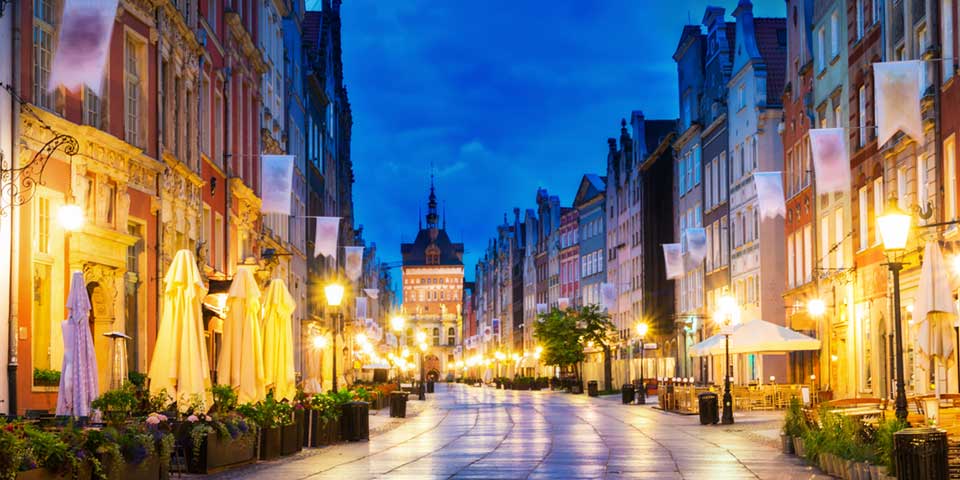
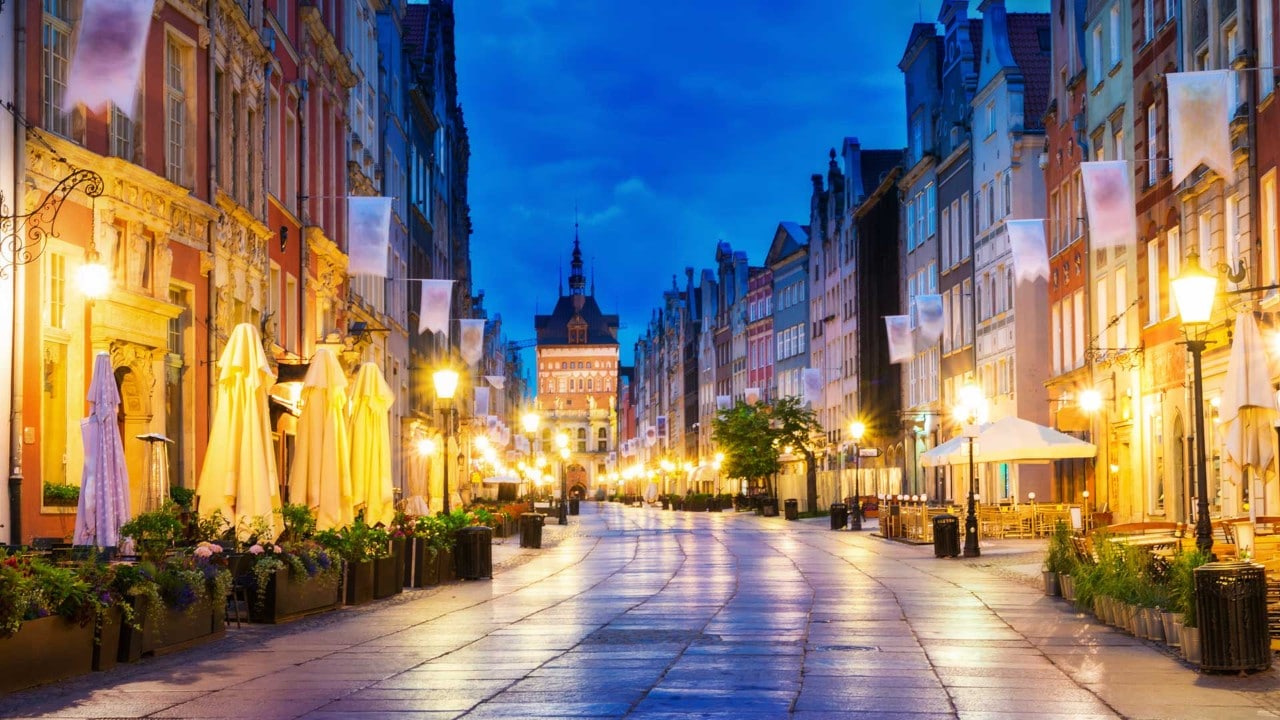
Begin your visit with a stroll through the cobbled streets of Długi Targ in the Main City. Designated exclusively for pedestrians, this part of Gdańsk was destroyed during World War II and then carefully rebuilt.
Stroll along Długa Street and Długi Targ, which ends in the east with the Green Gate and in the west with the Golden Gate. It is also worth spending a moment in a few amber shops and restaurants in the open air. Gdańsk is known throughout the world for amber, a fossilised resin from trees used in the production of jewellery.
Along the way you can see the Neptune Fountain - a symbol of the city located in the centre of Długi Targ. This bronze statue was created between 1606 and 1613 by the Flemish artist Piter Husen. According to legend, Neptune once touched his trident to create the famous Gdańsk vodka Goldwasser.
In Poland, where almost 90% of inhabitants are practising Catholics, religion is important.
Regardless of whether you are Catholic or not, visit St Mary's Basilica, the largest brick church in the world and in general the largest church in Poland. This building from the 14th century has 31 chapels and 37 large windows; it can accommodate over 20,000 people. Many frescoes were destroyed during World War II, but some have survived to this day.
The enormous, 7.5-metre astronomical clock - dating from 1464 - allowed tracking of the movements of the sun and moon, and also displayed zodiac signs, which in the case of a Catholic church is unusual. It is worth climbing the several hundred steps of stairs to the top of the church tower to enjoy a beautiful view of the city.
Another fascinating church, located just 20 minutes from the city centre by car, is Oliwa Cathedral. This church was built in the 13th century but was repeatedly renovated due to damage caused during invasions and wars. Its most remarkable monument is an enormous baroque organ, built between 1755 and 1780 by Johann Wulff and equipped with 7,896 pipes. The organ has 110 registers which provide an incredibly wide dynamic range. It is worth planning a visit so that after listening to a 20-minute demonstration of playing the organ - this is something you will not forget for a long time.
Gdańsk is approximately two hours' drive from Bydgoszcz and just over three hours from the capital city, Warsaw - making it an attractive destination for an additional day trip from these cities.